What Is German Language Called in German? Learn the Correct Word
Enroll Now
Published: 2026-05-12 10:26:10
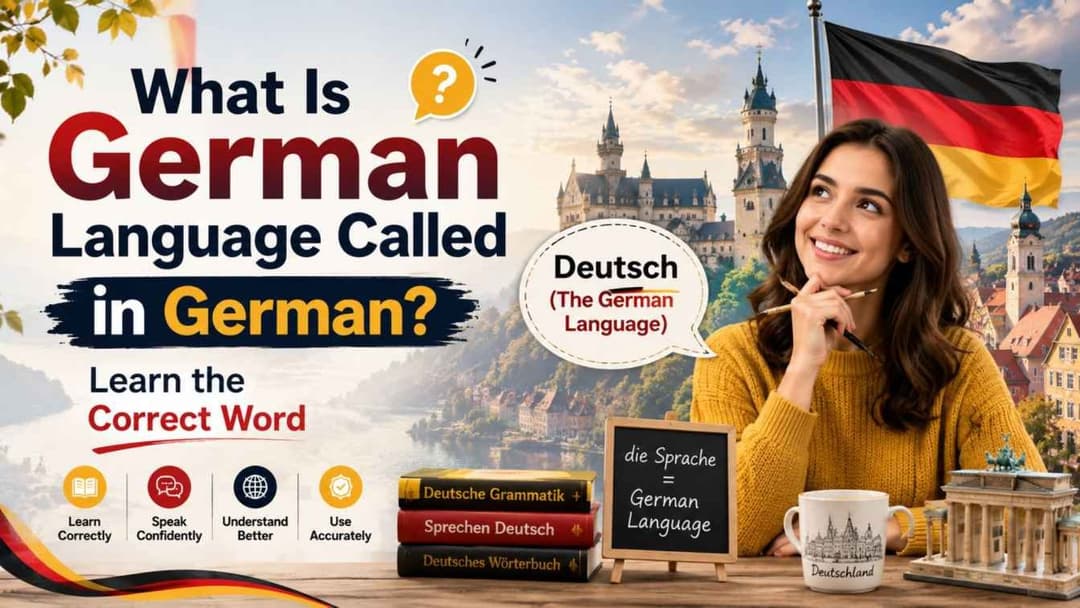
Many language learners often ask, “What Is German Language Called in German?” The answer is simple yet very interesting from a historical and linguistic perspective. In the German language, German is called Deutsch (pronounced: doych or [dɔɪ̯tʃ]). This word is widely used by native speakers when referring to their language, culture, and national identity.
German is one of the most influential languages in Europe and is spoken by millions of people worldwide. Whether you are planning to study German for education, travel, career opportunities, or cultural understanding, knowing the origin and meaning of the word “Deutsch” can help you better understand the language itself.
In this detailed article, you will learn What Is German Language Called in German, its meaning, history, pronunciation, origin, relation to other languages, and much more.
What Is the German Language Called in German?
The German language is called Deutsch in German.
Native speakers commonly use the word Deutsch in daily communication. For example:
Sprechen Sie Deutsch? – Do you speak German?
Ich spreche Deutsch. – I speak German.
The word Deutsch represents both:
The German language
German cultural identity
Germany itself is called Deutschland, which means “Land of the People.”
Beginners starting their German learning journey can read this detailed guide on how to prepare for the Goethe German A1 exam for effective preparation strategies and study tips: how to prepare for the Goethe German A1 exam
Pronunciation of Deutsch
The pronunciation of Deutsch may feel difficult for beginners initially.
Correct Pronunciation:
Deutsch = Doych
The “eu” sound in German is pronounced similar to “oy” in English words like:
Boy
Toy
Joy
Learning proper pronunciation is an important part of German language learning.
What Is German Language Called in German — Complete Explanation in English
The German language is officially called Deutsch by its native speakers. It is the official language of Germany, Austria, and Liechtenstein, and a co-official language in Switzerland, Luxembourg, and Belgium. The term Deutsch is used by native speakers to refer to both their language and their national identity.
Deutsch originates from the Old High German word diutisc, meaning "of the people" or "belonging to the people." In the Middle Ages, this term was used to differentiate the vernacular language spoken by ordinary people from Latin — the dominant language of the church and the educated elite. Over centuries, diutisc evolved into Deutsch, and Germany itself became known as Deutschland — literally, "land of the people."
The standardized form of the language used in education, media, and official communications is called Hochdeutsch (Standard German). This is the version taught in language schools across the world, including at TILS - School of Foreign Languages in New Delhi.
Key Facts at a Glance:
| Official Name | Deutsch |
| Pronunciation | [dɔɪ̩tʃ] |
| Language Family | West Germanic (Indo-European) |
| Native Speakers | ~100 million worldwide |
| Country Name | Deutschland ("Land of the People") |

Why Is German Called Deutsch?
One of the most common questions among learners is:
Why is German called Deutsch?
The reason is deeply connected to history.
The root word:
diutisc
meant:
- Popular language
- People’s language
As languages evolved across Europe, this word slowly transformed into Deutsch.
The country name:
Deutschland
also comes from the same root.
This linguistic evolution explains why German speakers say Deutsch instead of “German.”
Students who want to understand proficiency levels should explore this complete Goethe exam guide A1 to C2 levels explained article before choosing the right German certification: Goethe exam guide A1 to C2 levels explained
German Language and Its Origins
German belongs to the:
West Germanic language family
It is closely related to:
- English
- Dutch
- Frisian
Because of their shared roots, many German and English words sound similar.
Examples:
| English | German |
| House | Haus |
| Water | Wasser |
| Friend | Freund |
| Mother | Mutter |
This is why English speakers often find German vocabulary somewhat familiar.
German Language Is English?
Many learners search:
German language IS English
The answer is:
No, German and English are different languages.
However, they share common linguistic roots because both belong to the West Germanic family.
Similarities:
- Similar sentence structures
- Shared vocabulary
- Common grammatical roots
Differences:
- German grammar is more complex
- German uses gendered nouns
- German sentence order can differ greatly
Even though English and German are related, they are still separate languages.
Is the German Language Dutch?
Another commonly searched question is:
Is the German language Dutch?
No, German and Dutch are different languages.
However:
- Both belong to the West Germanic language family
- Both evolved from similar roots
- Both share vocabulary similarities
Interestingly, the English word “Dutch” and the German word “Deutsch” come from the same ancient root word:
If your goal is fluency, this guide on want to be fluent in German explains practical techniques to improve speaking, listening, and vocabulary skills faster: want to be fluent in German
diutisc
Over time:
- Deutsch became associated with Germany
- Dutch became associated with the Netherlands
Although similar, German and Dutch have different pronunciation, grammar, and spelling systems today.
What Are the Top 3 Languages Spoken in Germany?
If you are wondering What are the top 3 languages spoken in Germany, here are the main ones:
1. German
German is the official and most widely spoken language in Germany.
2. Turkish
Due to a large Turkish community, Turkish is one of the most commonly spoken minority languages.
3. English
English is widely understood, especially among younger generations and professionals.
Other languages spoken in Germany include:
- Arabic
- Russian
- Polish
- Kurdish
- French
Germany is becoming increasingly multilingual because of globalization and immigration.

How Many Languages Are Spoken in Germany?
A frequently searched query is:
How many languages are spoken in Germany?
Germany is home to more than 100 spoken languages due to its multicultural population.
Students planning future career opportunities can also explore the benefits of joining a German language course after 12th for study abroad and job opportunities: German language course after 12th
Official Language:
- German
Recognized Minority Languages:
- Danish
- Sorbian
- Frisian
- Romani
Additionally, immigrant communities contribute many international languages.
Despite this diversity, German remains the primary language used in:
- Education
- Government
- Media
- Business
Standard German: Hochdeutsch
The standardized form of German is called:
Hochdeutsch
Meaning:
High German
This version is taught in schools, universities, and language institutes.
Hochdeutsch is used in:
- Television
- Newspapers
- Official communication
- Academic education
Regional dialects exist throughout Germany, but Hochdeutsch helps maintain linguistic consistency nationwide.
Proper preparation is essential for language success, so readers should also check these useful preparation tips for German language exams before appearing for certification tests: preparation tips for German language exam
German Alphabet and Special Characters
German uses:
- 26 Latin alphabet letters
Additionally, it includes:
- Ä
- Ö
- Ü
- ß (Eszett)
These special characters are important in German pronunciation and spelling.
Examples:
- schön
- groß
- über
Learning umlauts properly helps improve pronunciation accuracy.
Benefits of Learning German
German is one of the most useful foreign languages globally.
Career Opportunities
German companies operate worldwide and offer excellent employment opportunities.
Higher Education
Germany is famous for affordable and high-quality education.
Travel & Culture
Learning German enhances travel experiences across Europe.
Academic Research
German remains important in engineering, science, and philosophy.
Learn German with TILS – School of Foreign Languages
If you are interested in learning German professionally, TILS – School of Foreign Languages offers structured courses for beginners as well as advanced learners.
At TILS – School of Foreign Languages, students receive:
- Professional language training
- Speaking practice
- Grammar sessions
- Vocabulary development
- Pronunciation improvement
- International exam preparation
Whether you want to study abroad, improve career opportunities, or simply learn a new language, TILS – School of Foreign Languages provides expert guidance for every learner.
Candidates interested in certification tests can understand the complete process through this guide on German exam registration in India including fees, eligibility, and exam centres: German exam registration in India
Tips for Learning German Faster
Practice Daily
Consistency is the key to language mastery.
Focus on Pronunciation
German pronunciation becomes easier with regular listening practice.
Learn Basic Vocabulary
Start with daily-use German words and phrases.
Watch German Content
Movies, podcasts, and videos improve listening skills.
Read German Texts
Reading helps improve grammar and sentence structure understanding.
Common German Phrases for Beginners
| German Phrase | English Meaning |
| Guten Morgen | Good Morning |
| Danke | Thank You |
| Bitte | Please / You’re Welcome |
| Ich spreche Deutsch | I speak German |
| Wie geht’s? | How are you? |
These simple phrases are useful for beginners starting their German learning journey.
To understand globally recognized qualifications, read this detailed article about German language certifications and their importance for careers and higher education: German language certifications
Frequently Asked Questions (FAQs) About the German Language
1. What do Germans call the German language?
Germans call their language Deutsch. The word comes from the old German term “diutisc,” which means “of the people” or “people’s language.” Native speakers use Deutsch in daily conversation when referring to both the language and German identity. Germany itself is called “Deutschland.”
2. Why is German called Deutsch?
The term Deutsch developed from the Old High German word “diutisc.” In medieval times, it was used to distinguish the common spoken language from Latin, which was mainly used by churches and scholars. Over time, diutisc evolved into the modern word Deutsch used today.
3. Is German difficult to learn for beginners?
German may seem challenging initially because of grammar rules and pronunciation, but it becomes easier with regular practice. English speakers often find German vocabulary familiar because both languages belong to the same Germanic language family. Consistent listening, reading, and speaking practice can help learners improve quickly.
4. What is the 3 hardest language in the world?
The difficulty of a language depends on a learner’s native language and learning background. However, languages often considered among the hardest include Mandarin Chinese, Arabic, Japanese, Korean, and Hungarian. German is usually considered moderately difficult compared to these languages.
5. How many people speak German worldwide?
German is spoken by more than 130 million people worldwide. It is the official language of Germany, Austria, and Liechtenstein, and it is also widely spoken in Switzerland, Luxembourg, and parts of Belgium.
Strong grammar skills are essential for fluency, and this complete guide on German language grammar can help learners improve sentence structure and accuracy: German language grammar
6. How do I say “hi” in German?
The most common informal way to say “hi” in German is:
“Hallo”
Other greetings include:
- Guten Morgen – Good Morning
- Guten Tag – Good Day
- Guten Abend – Good Evening
These greetings are commonly used in everyday German conversations.
7. Is German similar to English?
Yes, German and English share many similarities because both belong to the West Germanic language family. Many vocabulary words sound alike, such as Haus (House) and Wasser (Water). However, German grammar and sentence structure are more complex than English.
8. How many languages are spoken in Germany?
More than 100 languages are spoken in Germany due to its multicultural population. German is the official language, while Turkish, English, Arabic, Polish, and Russian are also commonly spoken among immigrant communities and international residents.
9. What is Hochdeutsch in German?
Hochdeutsch means “High German” or Standard German. It is the standardized version of German used in schools, official communication, media, and education. Although many regional dialects exist, Hochdeutsch is understood across all German-speaking regions.
10. What diseases are Germans prone to?
Like many developed countries, Germany faces health issues such as cardiovascular diseases, diabetes, obesity, and respiratory illnesses. Lifestyle habits, aging populations, and stress-related conditions are common contributing factors. Germany also has one of the world’s advanced healthcare systems for treatment and prevention.
Absolute beginners can build a strong foundation through this beginner-friendly guide on German A1 for absolute beginners covering vocabulary, pronunciation, and basic communication: German A1 for absolute beginners
Final Thoughts
Understanding What Is German Language Called in German gives valuable insight into German history, culture, and linguistic evolution. The word Deutsch is much more than just a language name — it reflects centuries of identity, tradition, and communication among German-speaking people.
German continues to be one of the world’s most important languages for education, employment, international communication, and cultural exchange. Whether you are learning German for academic goals, career growth, or personal interest, building strong basics is the first step toward fluency.
Contact TILS – School of Foreign Languages
Visit Us
2/81-82, 2nd Floor, Lalita Park, Laxmi Nagar, New Delhi - 110092
Call Us
91 9218071730
Email Us
Start your language learning journey today with TILS – School of Foreign Languages and build strong German communication skills with expert guidance and practical training.