Japanese Alphabet for Beginners: Learn Hiragana, Katakana, and Kanji
Enroll Now
Published: 2025-12-02 06:32:57
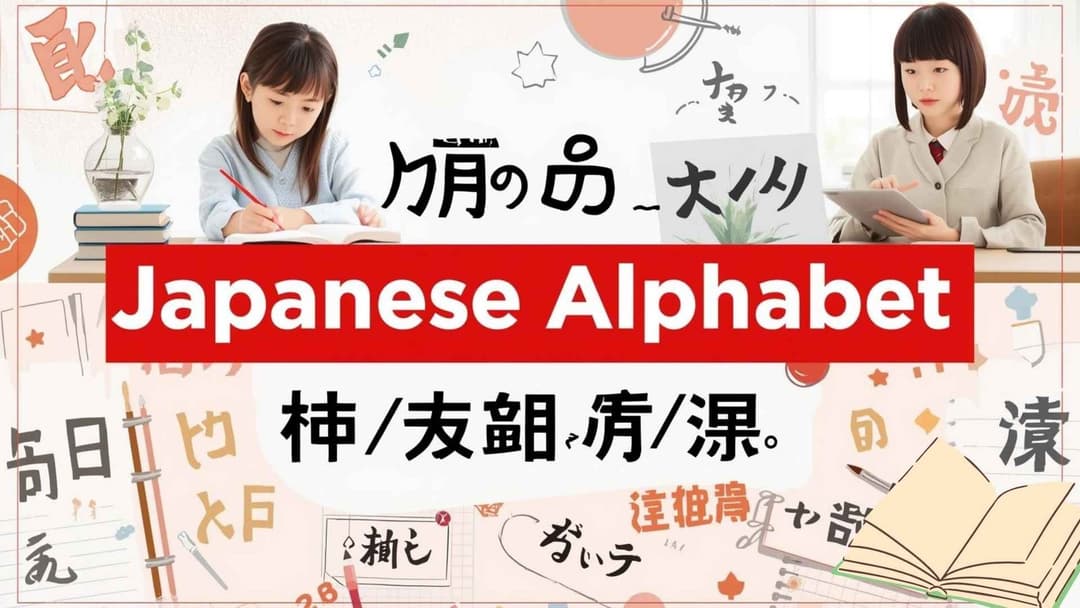
Learning the Japanese Alphabet is the very first step toward mastering the Japanese language. Unlike English or other Roman-letter languages, Japanese does not rely on a single alphabet system. Instead, Japanese is written using three main scripts: Hiragana, Katakana, and Kanji. If you are a beginner, you may feel confused at first, but once you understand how each script works, learning becomes enjoyable and systematic.
Japanese writing is a beautiful combination of sounds, symbols, and meanings. Whether someone aims to speak for travel, pass the JLPT exams, or work in Japan, learning the alphabet properly builds a strong foundation. Many learners search for Japanese alphabet to English conversion charts or Japanese letters A Z comparisons. While such resources help, it is important to know the structure and function of each writing system for effective learning.
This guide will help you understand all three scripts in detail, along with pronunciation tips, reading rules, and practice recommendations. You will also discover how to study these characters with confidence.
Strengthen your foundation by practicing JLPT N5 Grammar Practice Tests to improve accuracy and speed.
What is the Japanese Alphabet?
Many students ask what the Japanese Alphabet is and how it works. In English we use one alphabet with 26 letters A to Z. But Japanese is different. It uses three writing systems together:
- Hiragana – A basic phonetic script used for native Japanese words and grammar.
- Katakana – A phonetic script used for foreign words, sounds, and emphasis.
- Kanji – Symbols borrowed from Chinese that represent meanings.
So, the Japanese alphabet to English comparison is not based on direct letters but these writing systems. Learning them step by step helps you read, write, and pass JLPT smoothly.
Why Does Japanese Have Different Scripts
Before diving into writing, understanding why Japanese uses multiple writing systems is helpful.
Japanese originally had no writing system of its own. Around the 5th century, Japan adopted Chinese characters which later evolved into what we call Kanji today. To simplify writing for grammar and foreign borrowed words, two phonetic alphabets were created. These are Hiragana and Katakana.
So today, Japanese uses a mixed writing system:
| Script | Type | Usage | Characters |
| Hiragana | Phonetic | Native Japanese words and grammar | 46 basic characters |
| Katakana | Phonetic | Foreign words, sound effects, emphasis | 46 basic characters |
| Kanji | Logographic | Nouns, root verbs, adjectives, names | 2000 commonly used |
Each script plays an important role, which you will soon understand.
Learn fun phrases like Happy Birthday in Japanese to communicate casually with friends and family.
Japanese Alphabet Chart: Hiragana, Katakana and Kanji
Below is a basic table to help beginners visualize the alphabet system:
| Sound | Hiragana | Katakana | Kanji (Example) | Meaning |
| a | あ | ア | 日 | Day, Sun |
| ka | か | カ | 火 | Fire |
| sa | さ | サ | 水 | Water |
| ta | た | タ | 木 | Tree |
| na | な | ナ | 人 | Person |
| ha | は | ハ | 山 | Mountain |
| ma | ま | マ | 女 | Woman |
| ya | や | ヤ | 月 | Moon |
| ra | ら | ラ | 車 | Car |
| wa | わ | ワ | 金 | Gold, Money |
You can practice Japanese alphabet copy paste characters first but writing by hand is more effective.
Japanese Alphabet resources at TLS, which include charts, practice sheets, and PDF guides to strengthen your reading and writing skills.
Japanese Alphabet Hiragana: Your First Step
Hiragana is the most essential script for beginners. It represents the basic sounds of the Japanese language. Every character corresponds to a particular syllable such as a, ka, sa, ta, na, and so on.
Example characters:
- あ (a)
- か (ka)
- さ (sa)
- た (ta)
- な (na)
Hiragana is used to write:
- Grammar particles like は (wa), を (o), に (ni)
- Native Japanese vocabulary
- Verb and adjective endings
- Words without Kanji representation
Children in Japan first learn Hiragana. So if you are just starting, this is your first milestone too.
Master daily essentials by checking our guide on How to Tell the Time in Japanese

Tips to learn Hiragana easily:
- Memorize row-by-row (A, KA, SA, TA, NA…)
- Associate characters with shapes or pictures
- Practice handwriting daily
- Use flashcards and Japanese alphabet charts
Once you master Hiragana, you are able to read basic Japanese sentences such as:
にほんごをべんきょうします
(I study Japanese)
Explore diverse Foreign Language Courses in India to broaden your linguistic skills beyond Japanese.
Japanese Alphabet Katakana: For Foreign Words and Emphasis
Katakana is the second phonetic alphabet. It contains the same basic sounds as Hiragana but with different shapes. This script is used mostly for:
- Foreign borrowed words like コンピュータ (computer)
- Brand names and country names like インド (India), アメリカ (America)
- Sound effects like ドン (bang)
- Scientific or technical terms
Example Katakana characters:
- ア (a)
- カ (ka)
- サ (sa)
- タ (ta)
- ナ (na)
Katakana is a little sharper and more angular in appearance. Learning Katakana is important if you want to read menus, signs, or product labels in Japan. Many beginners download a Japanese alphabet PDF for Katakana specifically because it appears everywhere once you notice it.
If you want professional guidance, consider joining a Japanese Language Institute at TLS, where expert tutors help beginners master Hiragana, Katakana, and Kanji efficiently.
Japanese Alphabet Kanji: Carrying Meaning and Culture
Kanji are characters borrowed from Chinese. Unlike Hiragana and Katakana which only represent sounds, Kanji represent ideas and meanings. For example:
- 山 (yama) means mountain
- 木 (ki) means tree
- 水 (mizu) means water
- 日 (hi) means sun or day
One single Kanji can have multiple meanings and pronunciations depending on the context. This makes Kanji challenging but incredibly rewarding.
Why Kanji matters:
- It reduces ambiguity in sentences
- Increases reading speed
- Japanese newspapers, books, and websites mostly rely on Kanji
There are more than 50,000 Kanji in existence, but you only need around:
- 300 to pass JLPT N5
- 600 to pass JLPT N4
- 1000 to read daily materials
- 2000 to achieve native-level literacy
Learning Kanji step by step is important. Never try to memorize everything at once.
Apply for opportunities abroad by learning about Japanese Government Scholarships.

Japanese Alphabet Pronunciation Guide
Japanese pronunciation is surprisingly easy because every character has one fixed sound. There are no silent letters like English. Most characters are syllables containing one consonant and one vowel. For example:
- か = ka
- き = ki
- く = ku
- け = ke
- こ = ko
Vowel sounds are straightforward:
- A as in father
- I as in machine
- U as in flute
- E as in get
- O as in go
Once you learn the vowel sounds, reading becomes smooth and consistent.
Japanese Alphabet Copy Paste Reference
Beginners often look for Japanese alphabet copy paste tools online to start typing Japanese quickly. While helpful for practice, handwriting is still important because it strengthens memory and understanding of stroke order.
Here are sample characters you can copy:
Hiragana: あ い う え お
Katakana: ア イ ウ エ オ
Kanji: 山 人 日 川 木
Use these only as support. Try writing by hand for long-term learning.
Find institutes that offer support with visas by checking Japanese Language Institutes Offering Visa Assistance in Delhi.
How to Practice the Japanese Alphabet Effectively
Here are some useful learning strategies:
- Practice with flashcards daily
Repetition helps memorization. - Write characters in correct stroke order
Better handwriting and memory. - Use spaced repetition apps
Tools like Anki or Quizlet enhance retention. - Read simple children's books
They include Furigana which guides pronunciation. - Take lessons with a qualified instructor
Personalized guidance accelerates progress.
You can also create your own Japanese alphabet PDF by combining a chart with example vocabulary. Review it often.
Common Mistakes Beginners Should Avoid
- Mixing Hiragana and Katakana
- Ignoring stroke order
- Memorizing Kanji without understanding meaning
- Translating everything directly to English
- Not practicing listening and pronunciation
Consistency is key to becoming fluent.
Build a solid foundation in writing systems using Mastering Hiragana, Katakana, and Kanji: A Beginner’s Guide.
Where to Learn Japanese Alphabet in a Structured Way
Many students choose professional institutes to learn the Japanese language effectively. Expert guidance can save months of confusion. While choosing a school, look for:
- JLPT experienced teachers
- Interactive lessons and writing practice
- Structured syllabus for all levels
- Regular tests and feedback
In India, a trusted name among learners is TLS The Japanese Language School. Many successful students from TLS have cleared JLPT exams from N5 to N1 and have built careers in Japan.
Conclusion
The Japanese Alphabet is the foundation of your journey toward mastering the language. Hiragana helps you learn basic sounds. Katakana introduces you to loan words and daily expressions. Kanji connects you to culture, history, and advanced vocabulary.
Learning all three scripts step by step ensures better fluency in reading, writing, and speaking. Practice regularly, stay patient, and enjoy the beautiful world of Japanese communication. With dedication, you will start reading Japanese sooner than you expect.
Expand your vocabulary and reading skills with Learn Kanji and Japanese Words.

FAQs About Japanese Alphabet
1. What is the ABC's in Japanese?
The ABC’s in Japanese are not like English letters. Instead, they use Hiragana, Katakana, and Kanji to represent sounds and meanings.
- Hiragana: For native words and grammar
- Katakana: For foreign words and names
- Kanji: For concepts, nouns, and verbs
- Learning these scripts is the first step to reading and writing Japanese.
2. What do we say 1, 2, 3, 4, 5, 6, 7, 8, 9, 10 in Japanese?
Numbers in Japanese follow a simple pattern:
- 1 – いち (ichi)
- 2 – に (ni)
- 3 – さん (san)
- 4 – し / よん (shi / yon)
- 5 – ご (go)
- 6 – ろく (roku)
- 7 – しち / なな (shichi / nana)
- 8 – はち (hachi)
- 9 – きゅう / く (kyuu / ku)
- 10 – じゅう (juu)
- Understanding numbers is part of learning the Japanese Alphabet pronunciation rules.
3. How to write Japanese Alphabet A to Z?
Japanese does not have a direct A to Z like English. To write Japanese:
- Use Hiragana for native sounds
- Use Katakana for borrowed words
- Use Kanji for meaningful words and nouns
- You can also use Japanese Alphabet PDF charts to practice letters and sounds efficiently.
4. Can I learn Japanese in 3 months?
Yes, but only the basics. In 3 months, you can:
- Learn Hiragana and Katakana
- Memorize 100–200 Kanji characters
- Form simple sentences and greetings
Consistent daily practice with a professional tutor speeds up learning, and TLS The Japanese Language School offers structured short-term courses for beginners.
5. How do you say 7777777777 in Japanese?
In Japanese, numbers are pronounced by combining digit sounds:
- 7 – なな (nana)
- For repeated digits, say them sequentially: なな なな なな なな …
- For large numbers, there are special counting rules like 万 (man) for 10,000
- Understanding numbers is important for reading dates, phone numbers, and money in Japan.
6. What is the difference between Hiragana, Katakana, and Kanji?
- Hiragana: Phonetic, native words, grammar
- Katakana: Phonetic, foreign words, brands
- Kanji: Logographic, represents meaning
All three together form the Japanese Alphabet system, and knowing their function improves reading and writing fluency.
7. How can I practice the Japanese Alphabet daily?
- Write Hiragana and Katakana sheets every day
- Memorize a few Kanji characters daily
- Use flashcards or apps like Anki
- Read simple Japanese books or manga with Furigana
Daily practice reinforces recognition and writing accuracy.
8. Is it possible to type Japanese letters on a keyboard?
Yes. You can type using:
- Romaji input (Latin letters) converted to Hiragana/Katakana
- Japanese IME keyboard for Windows or Mac
- Copy-paste practice from Japanese Alphabet copy paste charts
Typing is useful for assignments and digital communication.
9. How do I remember Kanji meanings easily?
- Learn radicals (small components) first
- Associate characters with pictures or stories
- Practice writing Kanji repeatedly
- Use mnemonic techniques
- This approach makes Kanji less intimidating while learning the Japanese Alphabet system.
10. Where can I get proper Japanese Alphabet classes?
- Enroll in a trusted institute like TLS The Japanese Language School
- Choose courses with structured lessons for JLPT N5–N1
- Attend online or offline classes to suit your schedule
- Professional guidance ensures faster learning and better retention.
Start your script learning journey with How to Learn Hiragana and Katakana for beginners.
Call to Action
If you want expert guidance for learning the Japanese Alphabet and JLPT preparation:
Call Us
91 8700956038
Address
2/81-82, Ground Floor, Lalita Park, Laxmi Nagar, New Delhi - 110092
Email Us
tls@teamlanguages.com
Start learning with professionals and take your first step toward success in Japan.