
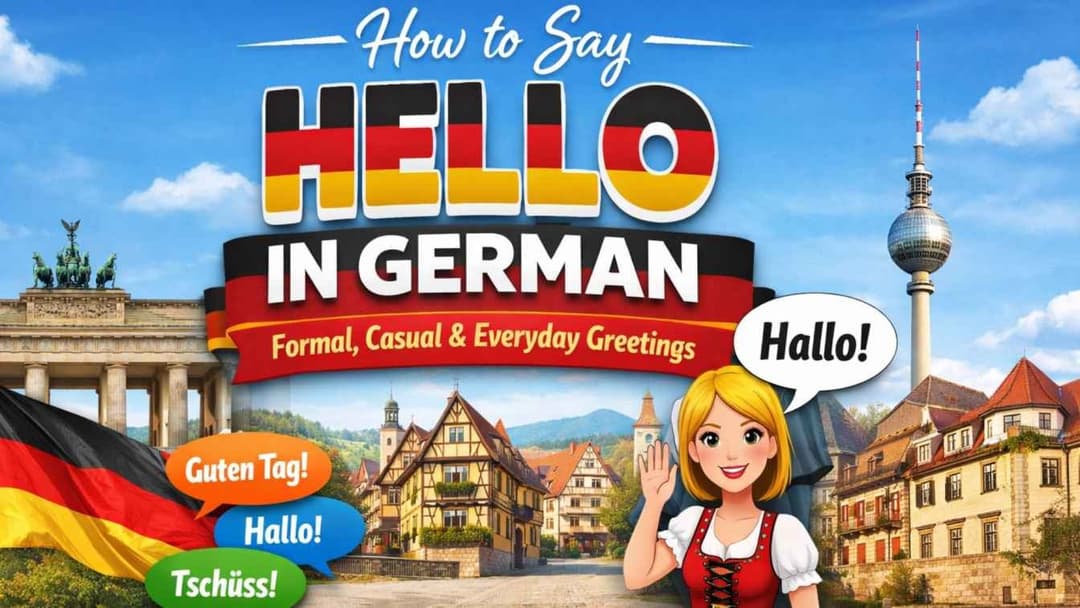
How to Say Hello in German (Formal, Casual & Everyday Greetings)
Enroll Now
Published: 2026-03-02 07:36:04
Learning greetings is the first and most important step when starting a new language. If you are beginning your German language journey, understanding How to Say Hello in German helps you communicate confidently in real conversations. Greetings in German are more than simple words. They reflect culture, politeness, and social context. Whether you are speaking with friends, teachers, colleagues, or strangers, choosing the right greeting makes a strong first impression.
In this complete guide, you will learn formal and informal German greetings, pronunciation tips, daily conversation phrases, and commonly used expressions that native speakers use every day.
Why Learning Greetings in German Is Important
Before learning complex grammar or vocabulary, greetings help you build instant communication skills. Saying hello properly shows respect and cultural awareness. Germans value politeness and appropriate communication, especially in professional and academic environments.
When you understand How to Say Hello in German, you can:
- Start conversations naturally
- Build confidence while traveling or studying abroad
- Communicate politely in professional settings
- Connect better with native speakers
- Improve pronunciation from the beginning
You can explore more details about enrollment, batches, and course guidance by visiting our Contact Us page for direct assistance from our experts.
The Most Common Way to Say Hello in German
The most widely used greeting in German is:
Hallo
Pronunciation: HAH-loh
This is the direct equivalent of “hello” in English. It is simple, friendly, and suitable for most casual situations.
You can use “Hallo” when:
- Meeting friends
- Talking to classmates
- Greeting neighbors
- Starting informal conversations
Many beginners searching How to say hello in german pronunciation start with this word because it is easy and universally understood.
How to Say Hello in German Formal Situations
German language distinguishes clearly between formal and informal speech. Formal greetings are used when showing respect or speaking professionally.
1. Guten Tag
Meaning: Good day
Pronunciation: GOO-ten tahk
This is the safest and most professional greeting.
Use it when:
- Meeting someone for the first time
- Talking to professors or seniors
- Business meetings
- Customer interactions
If you are learning How to say hello in german formal, “Guten Tag” should be your first choice.
2. Guten Morgen
Meaning: Good morning
Pronunciation: GOO-ten MOR-gen
Used until late morning, typically before noon. This greeting is common in offices and academic environments.
Many learners also search How to say good morning in German, and this phrase is the correct answer.
3. Guten Abend
Meaning: Good evening
Pronunciation: GOO-ten AH-bent
Used after sunset or during evening meetings.
Students looking to validate their language proficiency internationally should understand the importance of language certification for academic and career opportunities abroad.
How to Say Hello in German Informal Conversations
Informal greetings are used with friends, family, and people of the same age group.
1. Hi
Yes, Germans also use “Hi.” It is casual and widely accepted among younger speakers.
If you are wondering How to say hi in german google translate, you will notice that “Hi” often remains unchanged.
2. Hey
Meaning: Hey
Pronunciation: Same as English
This is common among friends and informal social settings. Many learners ask How to say hey in German, and the answer is surprisingly simple because Germans frequently use the English version.
3. Na
Meaning: Hey or What’s up
Pronunciation: Nah
This short greeting is extremely common in Germany among close friends. It often replaces a full sentence greeting.
If you are searching for a reputed institute in East Delhi, read our detailed guide on the best German language institute in Laxmi Nagar to make an informed decision.
Regional German Greetings You May Hear
Germany has regional diversity, and greetings vary across areas.
Servus
Used in southern Germany and Austria
Meaning: Hello or goodbye
Grüß Gott
Common in Bavaria and Austria
Meaning: God greet you
Moin
Used in northern Germany
Meaning: Hello at any time of day
Learning regional greetings helps you sound more natural and culturally aware.
How to Say How Are You in German
After greeting someone, the next step is asking about their well-being. Many learners search How to say how are you in German, and here are the most common options:
Wie geht es Ihnen
Meaning: How are you (formal)
Used in professional or respectful conversations.
Wie geht's
Meaning: How are you (informal)
Used with friends or peers.
Alles gut
Meaning: Everything good
A casual way to check on someone.
Typical responses include:
- Gut, danke. (Good, thank you)
- Sehr gut. (Very good)
- Nicht schlecht. (Not bad)
Understanding the career advantages and global opportunities becomes easier when you learn about the benefits of learning German in Delhi before starting your language journey.
Pronunciation Tips for German Greetings
Pronunciation plays a major role when learning How to say hello in german pronunciation correctly.
Here are helpful tips:
- German “H” is clearly pronounced.
- “Guten” sounds like “GOO-ten.”
- “Tag” ends with a strong “k” sound.
- Speak clearly and slightly slower at first.
Listening and repeating aloud improves confidence quickly.
Everyday German Greeting Conversations
Here are simple dialogues you can practice.
Formal Conversation
Person A: Guten Tag
Person B: Guten Tag. Wie geht es Ihnen
Person A: Gut, danke.
Informal Conversation
Person A: Hallo
Person B: Hey, wie geht's
Person A: Alles gut.
Practicing these daily helps you remember greetings naturally.
To choose the right certification level, you should review the different types of German language exams available for students and professionals.
Other Useful German Phrases to Know
Greetings often lead into polite expressions. Here are essential phrases every learner should know.
Thank You in German
Danke
Meaning: Thank you
More polite version:
Vielen Dank meaning Thank you very much.
Learning Thank you in German alongside greetings helps build polite conversations.
Goodbye in German
- Tschüss (informal goodbye)
- Auf Wiedersehen (formal goodbye)
Common Mistakes Beginners Make
When learning How to Say Hello in German, beginners often make small mistakes.
Using informal greetings in formal situations
Always use “Guten Tag” in professional environments.
Incorrect pronunciation
German pronunciation is precise. Practice regularly.
Translating directly from English
German greetings depend more on context than English greetings.
Tips to Practice German Greetings Daily
Improvement comes with consistent practice.
- Practice greetings in front of a mirror
- Listen to German videos or podcasts
- Use greeting phrases daily
- Speak with language partners
- Repeat pronunciation exercises
Consistency helps greetings become automatic.
Students planning to study abroad can also check the complete guide on the Mitsui & Co Scholarship 2026 India Guide for funding opportunities.
Cultural Etiquette When Greeting Germans
Understanding culture improves communication.
- Maintain eye contact while greeting.
- A handshake is common in formal situations.
- Use formal greetings until invited to speak casually.
- Punctuality is highly valued.
Politeness matters greatly in German society.
Why Learn German Professionally
German is one of the most important global languages for education and career growth. Germany offers world class universities, strong job opportunities, and international exposure.
Learning greetings is your first step toward:
- Studying in Germany
- Working with German companies
- International career opportunities
- Cultural exchange experiences
Learn German with Experts at TILS - School of Foreign Languages
If you want to master German from beginner to advanced level, professional guidance makes a huge difference. Structured learning helps you understand pronunciation, grammar, conversation skills, and real life communication faster.
TILS - School of Foreign Languages offers expert-led German language training designed for students, professionals, and study abroad aspirants. The courses focus on practical communication so learners gain confidence from day one.
Why Choose TILS
- Certified and experienced trainers
- Beginner to advanced German courses
- Interactive speaking sessions
- Exam preparation support
- Practical conversation training
- Personalized learning approach
Whether you are learning basic greetings or preparing for international opportunities, structured training accelerates progress.
For insights into student experiences abroad, read about MEXT scholarship student life in Japan and understand academic culture in Japan.
FAQs About How to Say Hello in German
1. How do you greet someone in German?
In German, greetings depend on the situation and level of formality. Common greetings include “Hallo” for casual conversations and “Guten Tag” for formal settings. Germans usually greet with eye contact and polite tone. Choosing the right greeting shows respect and cultural understanding. Learning proper greetings is the first step toward mastering German communication.
2. Do Germans say "Guten Tag"?
Yes, Germans commonly say “Guten Tag,” especially in formal or professional environments. It means “Good day” and is considered polite and respectful. You will hear it in offices, shops, schools, and official meetings. It is one of the safest greetings for beginners learning how to speak German correctly.
3. What is 777777 in German?
The number 777777 in German is written as “siebenhundertsiebenundsiebzigtausendsiebenhundertsiebenundsiebzig.” German numbers combine words into long compound forms. While not directly related to greetings, learning numbers helps improve pronunciation and vocabulary. Practicing numbers also strengthens your understanding of German language structure.
4. How do Germans say bye?
Germans use different words for goodbye depending on formality. “Tschüss” is informal and commonly used among friends and family. “Auf Wiedersehen” is formal and suitable for professional situations. In casual conversations, people may also say “Bye” or “Ciao.” Understanding greetings and farewells helps create complete conversations.
5. What is the most common hello in German?
The most common greeting in German is “Hallo.” It is easy to pronounce and works in most informal situations. People use it with friends, classmates, and colleagues. Beginners often start with this greeting because it is simple and widely understood across German-speaking regions.
Budget-conscious learners can explore options through this guide on an affordable German language course in Delhi designed for beginners and advanced learners.
6. How to say hello in German formal situations?
In formal situations, Germans typically use “Guten Tag,” “Guten Morgen,” or “Guten Abend.” These greetings show politeness and professionalism. They are used when speaking with elders, teachers, clients, or strangers. Using formal greetings correctly creates a positive first impression.
7. How to say hello in German informal conversations? | How to Say Hello in German
Informal greetings include “Hallo,” “Hi,” and “Hey.” Friends may also use short expressions like “Na,” which means “What’s up.” Informal greetings are relaxed and friendly. They are commonly used among people of the same age group or those who know each other well.
8. How do you ask how are you in German?
You can say “Wie geht es Ihnen?” in formal situations or “Wie geht's?” informally. Both mean “How are you?” and usually follow a greeting. Typical responses include “Gut, danke” meaning “Good, thank you.” This phrase is essential for everyday conversations.
9. Is pronunciation important when learning German greetings?
Yes, pronunciation is very important in German because small sound changes can alter meanings. Words like “Tag” have strong ending sounds that should be spoken clearly. Practicing pronunciation helps you sound more natural and improves listening skills when speaking with native speakers.
10. Can beginners learn German greetings quickly?
Yes, German greetings are easy to learn and remember with regular practice. Most greetings follow clear patterns and are used repeatedly in daily conversations. Practicing greetings daily builds confidence and helps beginners start speaking German faster without needing advanced grammar knowledge.
Improving vocabulary is essential for fluency, so reviewing structured German vocabulary lists can significantly enhance language learning speed.
Visit Us
2/81-82, Ground Floor, Lalita Park,
Laxmi Nagar, New Delhi - 110092
Call Us
919218071730
Email Us
info@teamforeignlanguages.com
Start your German learning journey today and build real communication skills with expert guidance.
Before registering for exams, students should understand the German language exam fees in India to plan their certification journey effectively.
Final Thoughts
Understanding How to Say Hello in German is the foundation of learning the language. From formal greetings like “Guten Tag” to casual expressions like “Hallo” and “Hey,” each greeting helps you communicate naturally in different situations.
As you continue learning, combining greetings with phrases like How to say how are you in German, polite expressions, and correct pronunciation will make conversations smoother and more confident.
Language learning begins with simple words, but those words open doors to new cultures, friendships, and global opportunities. Practice daily, speak confidently, and continue expanding your German vocabulary step by step.
If you are researching institutes, this detailed guide about a German language school can help you compare learning options.
Start Speaking German Confidently Today
Learning how to greet someone is the first step toward mastering a new language, and now that you understand How to Say Hello in German, it is the perfect time to take your learning further. Real fluency comes from guided practice, expert instruction, and consistent speaking experience.
Students often search locally for training centers, and this article on finding a German language school near me provides helpful selection tips.
Join TILS - School of Foreign Languages and transform basic greetings into confident conversations through structured German language training designed for beginners and advanced learners alike.
Why Learn German with TILS?
- Expert certified trainers
- Practical speaking-focused classes
- Beginner to advanced German levels
- Study abroad and career guidance
- Interactive learning environment
Take the next step toward global opportunities and start your German learning journey today.
Visit Us
2/81-82, Ground Floor, Lalita Park, Laxmi Nagar, New Delhi - 110092
Call Us
91 9218071730
Email Us
info@teamforeignlanguages.com